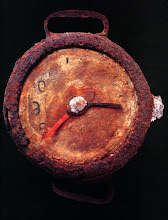
"Donald Duck in the cartoons and the unfortunate victim in real life receive their beatings so that the spectators can accustom themselves to theirs.... There is laughter because their is nothing to laugh about." Horkheimer & Adorno, Dialectic of Enlightenment (1947)
Dear prisoners, we’ve come here today bringing music up to your prison walls. By our little concert we want to show you you haven’t been forgotten.
We aren’t enough today to throw these walls and give you back your freedom. So we’ll come again another day with our angry bags and pipes. Back we’ll be repeatedly till we bring the day we’re strong enough
to break you out.
* * *
First revolutionary tasks: 1) Take out all surveillance cameras. 2) Learn the local flowers & birdsongs. 3) “Read, read, read!” 4) Sleep naked.
Romeo Clandestino suggests Aikido. Yoga for the masses is also sage. Comrades and lovers need bodies they can bring to bear, respendent, lithe as cats and ropewalkers. Romeo says: parcours for the young and quick-healing, simple bouldering for the oldsters.
Artistry. Mind and body finely balanced, glad-making. All the arts in their slow- unfolding secrets are potencies, personal and collective. The struggle is demanding. Ergo, one does not live by one century alone.
from On Stupidity in Music, an Imaginary Dialogue (1958) by Hanns Eisler
If I think of the stupidity in music I am of the opinion that the desperate do find consolation.
But isn't consolation the real aim of art, especially of music?
Concerning consolation, I can tell you something from the secret documents of the Austro-Hungarian state police in the year 1805 in Vienna, which says: "In times like the present, when manifold sufferings affect the character of the people, the police must pay more regard than ever to popular distractions. The most dangerous hours are in the evening. How can these hours be better and more harmlessly spent than by listening to music?"
But Eisler, 1805 was the year Beethoven composed his Third Symphony, the Eroica. Did the police chiefs want the Viennese to listen to this revolutionary music?
You overestimate the intelligence of the state police in 1805.
Is bad music always stupid?
No. Dangerous things are unfortunately mostly not stupid. But now I'll contradict myself and give you something "in praise of bad music." Here's what Proust wrote in Les plaisirs et les jours: "Pour out your curses on bad music, but not your contempt!"
Here lies Lon Riley. He hath not lute nor lyre and mourns it hardly.
* * *
4:33am. Song eats its own tail and looses its cookies thereby.
Moon hangs low like a wounded scrotum and seeds hit the asphalt swimming.
Café con leche? OK, let’s go!
* * *
Full fathom five big daddy lies, who never told the truth.
To have or not having have pistol held to head, police don’t ask that question. “We don’t have classes here.”
First lie, that labor forced macht frei.
“As I would not be a slave,” so I will not be a wage-slave either, Uncle Abe, old slim high fiver.
[Quoth same: Preachers at pulpit should address the congregation as if “chasing bees.” Me, I prefer my preachers gone.]
You own the clock and the time, for now. Soon enough, maybe, we’ll reckon otherwise. Baron Pluto, meet Kidd Sabot!
* * *
Had they ever freely shared with us their booty, we might believe they do not treat us meanly. As is, we think we learned to see slinkingly, back of the class room they built for us. Wethinks that be obscenely!
From the crier in the hood, to the leisured lords, engated: You will hear the acts of our petition in words of flaming cars. If he fall into our hands, Ceasar will go down tonight, Rome and her rats will jump and all this bitch will burn.
What is the city but the people? “Let them cry tears, not havoc.” This for that, hand to hand, war of all against all.
Streets of gold, walls of tears. City thrown up on a stolen rock.
“The critical yardstick that allows reason, and indeed compels and obliges reason, to oppose the superior strength of the course of the world is always the fact that in every situation there is a concrete possibility of doing things differently.” T.W. Adorno
“Sit with us, stranger, and after you have shared our meal, tell us, if you will, who you are and how you come here.”
Travelers, wherever they are, always aim for home. Return will always already have defined them. Not that, then.
Exiles are banished, expatriates live abroad by choice.
Banishment: decreed, or self-imposed, the state of non-reconciliation.
Expats may be reconciled, or not. Their distance does not exclude the identifications of patriots.
Exiles have lost, or cut, this umbilical cord.
Formed by, but severed from, motherplace.
A traumatic second birth, perhaps. But also a potential. Of critical production, of empowerment in dispossession.
As in: “silence, exile and cunning” of a Stephen Daedalus.
But what a gap of disaster between Stephen and us...
Too much to make a home of art, like that.
Still, the exile eye, then, for what it can see. And despairing cannot prevent.
The protest of words, artful or not, responding, dribbling out under flawed direction or ranting wildly, refracted through the estranged and alien optic of exile.
 "By virtue of achieved mimesis, these works contain the quality of Beauty in its perhaps most sublimated form: as political Eros."
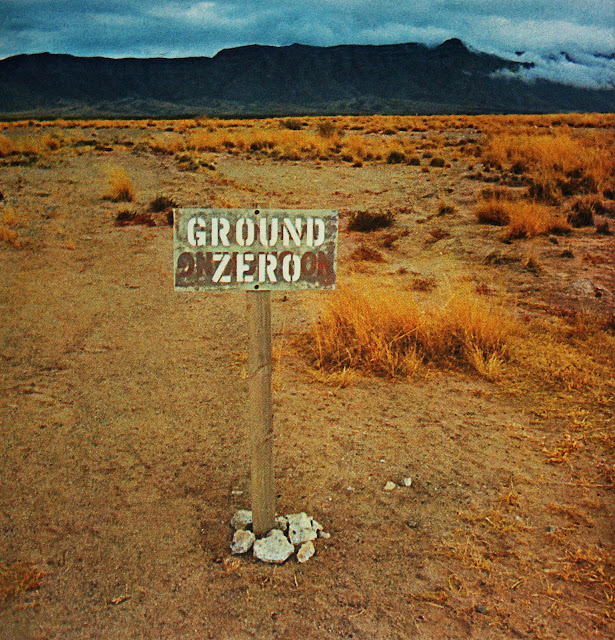

 “The critical yardstick that allows reason, and indeed compels and obliges reason, to oppose the superior strength of the course of the world is always the fact that in every situation there is a concrete possibility of doing things differently.” T.W. Adorno