Showing posts with label scars. Show all posts

Wednesday, October 10, 2012

on the mattering of silence and avowal

'
Arman, untitled combustion, 1964
Plight of the After: Further Notes on Cage, Silence, Arman, Beuys, Adorno, Beckett, Trauma, Rememoration and Negative Presentation in Post-1945 Visual Art

by Gene Ray

Beuys, Plight, 1985
Two works by Joseph Beuys, or more precisely, two contrasting moments in his output: the first, a proposal for a Holocaust memorial produced in 1958, a feeble misfire; the second, the installation Plight, made and exhibited in 1985, a forcefully effective work of historical avowal. These two moments document the impressive development of one German artist. But more than that, they indicate the whole painful struggle within the visual arts to confront and respond to the Nazi genocide, a crime of state terror for which the place-name ‘Auschwitz’ has come synecdochically to stand. For visual artists willing to risk such a confrontation, the means and strategies with which to do so were by no means clear or obvious in 1958; if, after 1985, such means and strategies were established and available, that was due to the work of many, in a collective development that was absorbed and synthesized in Plight.
    
Beuys’ proposal for a memorial at Auschwitz-Birkenau, submitted in March 1958 to the juried competition organized by an association of camp survivors, was a failure by any standard. His offer to overshadow the camp with a monumental ‘monstrance’ derived from Roman Catholic ritual was wildly, monstrously inappropriate. I register this moment of misfire only to establish Beuys’ relatively early concern with the meaning, legacy and representation of Auschwitz. Beuys was one of 426 artists who submitted proposals to the jury convened in 1956 by the Comité international d’Auschwitz. For it, he produced numerous drawings and models in wood, pewter and zinc. None are compelling or evince much insight. Some were later incorporated into various installations and vitrines, including Auschwitz Demonstration 1956-1964; the dates in the title of the latter indicate the artist’s retrospective desire to establish his continuous engagement with the Nazi genocide and the problem of its artistic representation. This desire is significant, especially given Beuys’ evident reticence with regard to Nazism and its crimes. These early sketches and models, loaded with the Christian symbolism of sin, guilt, sacrifice and forgiveness, may betray the stirrings of the artist’s own unresolved conflicts in facing this history. They certainly illuminate a profound confusion before the crisis of representation imposed on art ‘after Auschwitz’, to use the phrase of Theodor W. Adorno. This confusion was hardly unique at the time; it marks a moment when the dialectic between genocidal history and representation was felt by some European visual artists as the pressure of a still unclarified problematic.
     
Beuys, Auschwitz Demonstration, 1964
The negative presentation of Auschwitz through the indirect material linkages and evocative strategies deployed so effectively in Plight – the environment he installed in the London gallery of Anthony d’Offay in 1985 – was only possible after the investigation of negative presentation in the visual arts had reached a certain point of development. The artistic strategy evident in this work manifests an understanding of the potentials of negative evocation to respond to historical trauma and catastrophe, as well as an at least minimally conscious control of the sculptural means for such evocation. With regard to artistic means, all the techniques used by Beuys in Plight had probably been developed by other artists by the end of 1961, although their potentials would not have been immediately clear to all.[1] The necessary historical disclosures no doubt took longer to circulate and fully sink in; the critical processing of those disclosures is by no means complete today.

Plight is a culminating work, in the precise sense that it consolidates this collective investigation and development that took place in the visual arts between 1945 and the end of 1961 in a way so compelling that it establishes a new standard for artistic approaches to Auschwitz. The negative memorials that in the 1990s would become the institutionally preferred model for monumental public remembrance are prefigured by Plight and are, by and large, merely echoes or variations on it. I am not concerned in this essay to treat Beuys’ personal development or career in any detail, beyond what I have done elsewhere.[2] Here I focus on Plight, in order to unfold from this one work the outlines of a larger history – the discovery and development, in the visual arts, of negative, dissonant strategies for representing catastrophic history in the aftermath of World War II.

Wednesday, September 1, 2010

postcard from cyprus


Κάτω η Χούντα (Káto e Hoúnta: "Down with the Junta").

Still legible on a wall in the village of Kritou Terra, Pafos district: graffiti from the Spring or early Summer of 1974 - from the time between Ioannidis's 'coup within a coup' in Greece and the 15 July coup against Makarios in Cyprus.

Between the lines: After the student uprising in Greece was crushed by tanks at the Polytechnic University in Athens on 17 November 1973, splits within the military leadership came to a head. Papadopoulos was ousted by the hardliner Ioannidis. Under Ioannidis, the Greek Junta stepped up its campaign against Makarios, the elected President of the Cyprus Republic. Makarios, one of the two main leaders of the national liberation struggle against the British during the 1950s, had accepted the compromised sovereignty imposed on the new Republic, but continued to work diplomatically for the conditions of full Cypriot sovereignty. His strategy included an independent foreign policy that refused to subordinate Cyprus to US and British Cold War politics. (His independent diplomacy and participation in the Non-Aligned Movement led US critics to smear him as "the Castro of the Mediterranean.")

The Junta in power in Greece since the 1967 coup actively sought to replace Makarios with a more pliable figure. It encouraged ultra-nationalists in Cyprus to revive the goal of enosis, or union with Greece, and sponsored the right-wing paramilitary group EOKA-B. Several attempts were made to assassinate Makarios. By Spring of 1974, with Ioannidis in power in Greece, Makarios's intelligence service uncovered evidence of an impending coup. On 2 July, Makarios published an open letter to the Greek Junta, protesting their interference. The reply came on 15 July, when Greek officers of the Cypriot National Guard launched a full attack on the presidential palace. Makarios escaped, but had to flee the island, and ultra right-wing trigger-man Nikos Sampson was installed as interim leader. Five days later, Turkey invaded Cyprus.

Behind the scenes: US imperialism. In the distracting confusion of Watergate and Nixon's fall, Kissinger gained a freer hand to shape and micromanage US foreign policy. He used the agencies of US power to push the crisis between Makarios and the Greek Junta toward an outcome that would maintain Cyprus as a NATO force platform. This entailed eliminating Makarios, but also containing the conflict without a war between Greece and Turkey. The forced partition of the island under Turkish arms would accomplish this, as long as US acceptance was clearly signaled. The self-styled Metternich struck again. And Cypriot aspirations to self-determination were once again brutally subordinated to the Cold War calculus. In the aftermath of spilled blood, occupation and forced removals, Turkey was appeased, Greece was disciplined without conceding "too much" democracy, and  British military bases and US spy stations continued to operate.

The graffiti probably dates from between Makarios's public letter of 2 July and the coup thirteen days later. The village of Kritou Terra, we're told, was a stronghold of Makarios supporters - center-nationalist rather than leftist, but pro-democracy and anti-Junta.

AP/GR

Saturday, August 28, 2010

the village


 A nine-panel comic by Michael Baers.

Friday, August 6, 2010

against forgetting


"Articulating the past historically does not mean recognizing it 'the way it really was.' It means appropriating a memory as it flashes up in a moment of danger. Historical materialism wishes to hold fast to that image of the past which unexpectedly appears to the historical subject in a moment of danger. The danger threatens both the content of the tradition and those who inherit it. For both, it is one and the same thing: the danger of becoming a tool of the ruling classes. Every age must strive anew to wrest tradition away from the conformism that is working to overpower it. The Messiah comes not only as the redeemer; he comes as the victor over the Antichrist. The only historian capable of fanning the spark of hope in the past is the one who is firmly convinced that even the dead will not be safe from the enemy if he is victorious. And this enemy has never ceased to be victorious."

Walter Benjamin, "On the Concept of History" (1940), thesis VI.

It's a struggle - to remember the victims, to mourn and ask again what is to be done. To denounce the criminals and their crimes, refuse the unceasing invitations to their victory celebrations, their false reconciliations and commanded identities.

Genocidal techno-power is no accident. It is an appearance-form of a master logic: the unfolding of a global social process, capitalist modernity and its proliferating antagonisms, the sequential crystallizations of the social force field, its relations and tendencies.

The moments and turns of class struggle on a global scale, the hot house of racing accumulation and imperialist rivalry, the emergency mutations of the capitalist state, administration and integration, the use and normalization of terror - in a word, enforcement.

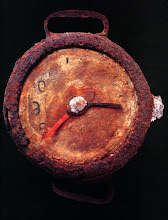
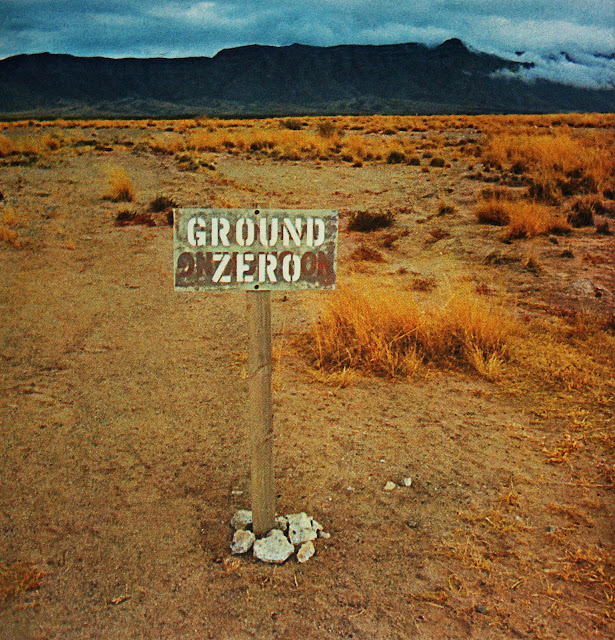
Now, this year, the spectacle announces, "the world" will commemorate Hiroshima Day. And for the first time, an official US envoy will "attend" ceremonies in the city destroyed by the first use of nuclear WMDs on this day 65 years ago.

What is the meaning of this "envoy" and this "attendance"? Does it announce that the perpetrating state will now express some form of official regret or apology? No. And what if it did? The only statement that would not be another dissembling victory of conformism would be a the speech of serious acts and measures toward disarmament and nuclear abolition.

Instead, the official rhetoric in this direction is covering a massive increase in US spending on the nuclear arsenals: 'modernization' processes that will lock in these WMDs and the US state's continuing dependence on them for another half-century.

The struggle against forgetting is waged from the bottom up. It has nothing to do with the official commemoration of states or the pseudo-critical mouthing of national stains. The work of this struggle is ours to do, with hell hounds at our heels.

GR

day of infamy


Guerrilla street theater by the Carnival of Democracy Players, Sarasota, Florida, 6 August 2001.

Photos by Gaby.

ghost sited


Greg Sholette sends this snapshot from his Return of the Atomic Ghosts project.

Saturday, February 6, 2010

on exile and expats

“Sit with us, stranger, and after you have shared our meal, tell us, if you will, who you are and how you come here.”

Travelers, wherever they are, always aim for home. Return will always already have defined them. Not that, then.


Exiles are banished, expatriates live abroad by choice.

Banishment: decreed, or self-imposed, the state of non-reconciliation.

Expats may be reconciled, or not. Their distance does not exclude the identifications of patriots.

Exiles have lost, or cut, this umbilical cord.

Formed by, but severed from, motherplace.

A traumatic second birth, perhaps. But also a potential. Of critical production, of empowerment in dispossession.

As in: “silence, exile and cunning” of a Stephen Daedalus.

But what a gap of disaster between Stephen and us...

Too much to make a home of art, like that.

Still, the exile eye, then, for what it can see. And despairing cannot prevent.

The protest of words, artful or not, responding, dribbling out under flawed direction or ranting wildly, refracted through the estranged and alien optic of exile.

Bad singing, lector caveat.