Showing posts with label struggles. Show all posts

Saturday, September 21, 2013

dispatch from greece: murder of an antifascist

Pavlos Fyssas (aka Killah P)

Antifascist Killah P Stabbed to Death by Golden Dawn Member in Piraeus

by Contra Info

In the early hours of September 18, 2013, 34-years-old antifascist Pavlos Fyssas (aka Killah P) was stabbed to death by Nazis of the “Golden Dawn” party in Piraeus (port of Athens).
Raw reports on indymedia relate that the murder took place just after midnight on Wednesday in Amfiali, in the Keratsini district of Piraeus. It appears that Pavlos Fyssas and his small company of friends were persecuted and ambushed by a larger group of Nazis. This in the presence of cops from the DIAS motorcycle unit. Minutes later, the antifascist was stabbed twice by one of the Nazis who came out of a vehicle and attacked him. The assailant was arrested by cops at the scene. But the exact circumstances of the assassination are yet to be confirmed, and much of this news comes from mainstream media coverage.
Pavlos Fyssas succumbed to his injuries shortly after he was evacuated in the Nikaia hospital. His funeral was arranged for September 19 at the Schisto cemetery.
In recent months, there have been several attempted murders and assassinations of ‘people of color’ (migrants, etc.) across Greece. This time, a Greek-born white leftist was assassinated by fascist scum. It appears, though, that Pavlos Fyssas was not a member of any leftist organization, but rather a street fighter with strong antifascist action. Killah P(ast) was his stage name as hip-hopper/rapper.
Meanwhile, there were major ‘repercussions’ in official politics. The establishment parties already tried to manipulate this deadly incident for electoral gains, while the Golden Dawn parliamentary thugs as always refuted any involvement of their devoted followers in any murder, again for electoral gains. However, the 45-year-old stabber Giorgos Roupakias, resident of Nikaia, has confessed his deed to the police, as well as his close association with the Golden Dawn. His association with Golden Dawn MP Kostas Barbarousis is well documented. The murderer is in custody, and three other Nazis — including his wife — were also detained (for withholding evidence of Roupakias’ association to the Nazi party).
On September 18, antifascist protests were called in response to the assassination in more than twenty cities/towns across Greece. Also, in few cities (e.g. in Chania, on Crete) Golden Dawn offices were trashed, and police troops were attacked. Various different direct actions happened at numerous spontaneous protests throughout the day.
During a large evening demonstration near the murder scene in Keratsini, heavy clashes broke out against the police; dozens of protesters were detained amid street battles (many faced charges). Previously, the leader of the far-right party “Independent Greeks” alongside his patriot henchmen were effectively attacked by antifascists. At least one demonstrator suffered severe eye injury from a direct shot of police tear gas, and underwent surgery at a local hospital. Doctors from the Tzaneio hospital stated that 31 protesters who were treated after the antifascist march in Keratsini were all wounded on the head by DIAS and DELTA cops. In addition, anti-riot squadrons and plainclothes thugs attacked antifascists jointly during that demo in Piraeus.
Clashes occurred in Thessaloniki and Patras, too, where mass detentions were reported.
Thanks to the comrades at Contra Info. -GR

Friday, July 5, 2013

snowden and the terror state


Trevor Paglen, They Watch the Moon, 2010.

Turnkey Tyranny, Surveillance and the Terror State

By Trevor Paglen


By exposing NSA programs like PRISM and Boundless Informant, Edward Snowden has revealed that we are not moving toward a surveillance state: we live in the heart of one. The 30-year-old whistleblower told The Guardian’s Glenn Greenwald that the NSA’s data collection created the possibility of a “turnkey tyranny,” whereby a malevolent future government could create an authoritarian state with the flick of a switch. The truth is actually worse. Within the context of current economic, political and environmental trends, the existence of a surveillance state doesn’t just create a theoretical possibility of tyranny with the turn of a key—it virtually guarantees it.

For more than a decade, we’ve seen the rise of what we might call a “Terror State,” of which the NSA’s surveillance capabilities represent just one part. Its rise occurs at a historical moment when state agencies and programs designed to enable social mobility, provide economic security and enhance civic life have been targeted for significant cuts. The last three decades, in fact, have seen serious and consistent attacks on social security, food assistance programs, unemployment benefits and education and health programs. As the social safety net has shrunk, the prison system has grown. The United States now imprisons its own citizens at a higher rate than any other country in the world.


While civic parts of the state have been in retreat, institutions of the Terror State have grown dramatically. In the name of an amorphous and never-ending “war on terror,” the Department of Homeland Security was created, while institutions such as the CIA, FBI and NSA, and darker parts of the military like the Joint Special Operations Command (JSOC) have expanded considerably in size and political influence. The world has become a battlefield—a stage for extralegal renditions, indefinite detentions without trial, drone assassination programs and cyberwarfare. We have entered an era of secret laws, classified interpretations of laws and the retroactive “legalization” of classified programs that were clearly illegal when they began. Funding for the secret parts of the state comes from a “black budget” hidden from Congress—not to mention the people—that now tops $100 billion annually. Finally, to ensure that only government-approved “leaks” appear in the media, the Terror State has waged an unprecedented war on whistleblowers, leakers and journalists. All of these state programs and capacities would have been considered aberrant only a short time ago. Now, they are the norm.

Monday, July 1, 2013

on the new phase in greece


Brutal Nihilism


by Yannis Stavrakakis


The recent decision to shut down ERT, the Greek public radio and television, has shocked the international community due to its brutal symbolism. However, although it constitutes a serious escalation of the ‘shock and awe’ strategy unfolding in Greece during the last three years, it should not cause surprise. The thoroughly unexpected and violent blackening of the screens has only highlighted the nihilism characteristic of the dominant policies already implemented under the auspices of European and international institutions.

While in the first stages of the crisis the imposition of the austerity avalanche involved and relied on its meaningful packaging, its embellishment with an ideological meaning able to secure a minimum of hegemonic consent – even one based on fear, blame, moralism and demonization – during the last period a variety of indications signal the passage into a new phase. Decision-making has gradually stopped claiming any concretely meaningful foundation, it lost any interest in winning consent – even through fear and extortion. What remains is, thus, its brutal imposition. It is not an illness, anymore, that justifies the (bitter) medication; it is not guilt that justifies the (harsh) punishment. Medication and punishment are autonomised and affect severely and equally the ill and the healthy, those who are guilty and those who are not-guilty, very often without the articulation of any persuasive justification. As a result, politics and policy is detached from any reasonable content and domination is reduced to repression. Distanced from any real argumentative support, the measures implemented openly reveal their functioning in favor of establishing a nihilistic system of domination through cruelty, which reduces citizens to ‘serfs’. This seems to be their only meaning and purpose.


Monday, June 17, 2013

chomsky on biosphere and enforcement


Humanity Imperiled: The path to disaster.

by Noam Chomsky


What is the future likely to bring? A reasonable stance might be to try to look at the human species from the outside. So imagine that you’re an extraterrestrial observer who is trying to figure out what’s happening here or, for that matter, imagine you’re an historian 100 years from now—assuming there are any historians 100 years from now, which is not obvious — and you’re looking back at what’s happening today. You’d see something quite remarkable.


Tuesday, June 4, 2013

marcuse on ecology and revolution


Ecology and Revolution

By Herbert Marcuse


(from Liberation 16 (September 1972):10-12)

Coming from the United States, I am a little uneasy discussing the ecological movement, which has already by and large been co-opted [there]. Among militant groups in the United States, and particularly among young people, the primary commitment is to fight, with all the means (severely limited means) at their disposal, against the war crimes being committed against the Vietnamese people. The student movement – which had been proclaimed to be dead or dying, cynical and apathetic – is being reborn all over the country. This is not an organized opposition at all, but rather a spontaneous movement which organizes itself as best it can, provisionally, on the local level. But the revolt against the war in Indochina is the only oppositional movement the establishment is unable to co-opt because neocolonial war is an integral part of that global counterrevolution which is the most advanced form of monopoly capitalism.


So, why be concerned about ecology? Because the violation of the earth is a vital aspect of the counterrevolution. The genocidal war against people is also “ecocide” insofar as it attacks the sources and resources of life itself. It is no longer enough to do away with people living now; life must also be denied to those who aren’t even born yet by burning and poisoning the earth, defoliating the forests, blowing up the dikes. This bloody insanity will not alter the ultimate course of the war, but it is a very clear expression of where contemporary capitalism is at: the cruel waste of productive resources in the imperialist homeland goes hand in hand with the cruel waste of destructive forces and consumption of commodities of death manufactured by the war industry.

In a very specific sense, the genocide and ecocide in Indochina are the capitalist response to the attempt at revolutionary ecological liberation: the bombs are meant to prevent the people of North Vietnam from undertaking the economic and social rehabilitation of the land. But in a broader sense, monopoly capitalism is waging a war against nature – human nature as well as external nature. For the demands of ever more intense exploitation come into conflict with nature itself, since nature is the source and locus of the life-instincts which struggle against the instincts of aggression and destruction. And the demands of exploitation progressively reduce and exhaust resources: the more capitalist productivity increases, the more destructive it becomes. This is one sign of the internal contradictions of capitalism.

Wednesday, May 8, 2013

gunboats redux


The Control Society and Gunboat Diplomacy

by Mikkel Bolt Rasmussen

Twenty-two years ago Gilles Deleuze published the short, five-page text “Postscript on control societies” in the French journal L’autre journal edited by Michel Butel. The text is an analysis of the arrival of what Deleuze calls the society of control, which he claims is replacing the disciplinary society. “We are moving toward control societies that no longer operate by confining people but through continuous control and instant communication”.[1] Deleuze’s text describes how the institutions of the modern disciplinary society wither and are replaced with a new kind of control that is no longer rooted in these institutions but is spread throughout the social body. As Deleuze phrases it, the striated space of the disciplinary society is replaced by the smooth space of the society of control. Control is now everywhere and is no longer only exercised in the delimited space of disciplinary power.

As Deleuze writes, his short sketch builds on insight from his friend Michel Foucault who analysed how in the 18th and 19th centuries there occurred a transformation of the former ‘sovereign’ society, where power was located at the top and was exercised over a territory. This hierarchical structure was replaced by another structure, the disciplinary society, where social mastery was located in institutions fabricating specific productive subjects and behaviours. In this society individuals moved from one closed room to another undergoing a production and regulation of habits and conduct: the factory, the family, the hospital, the school and the prison. The disciplinary society was thus a series of closed spaces producing relatively stable and demarcated forms. Each of these spaces or institutions had its specific logic of subjectification, structured according to a distinction between normal and deviant.

The point of departure for Deleuze’s small note is of course that the institutions of the disciplinary society are in a state of crisis. The closed spaces have become porous and the production of subjects has acquired a new form; it has become fluid, Deleuze writes. Now normalization is no longer restricted to the closed space of the institutions but takes place everywhere directly within the subjects that are no longer able to escape the disciplinary apparatus but are always working, studying, recovering, etc.

Sunday, March 17, 2013

banksy on the meltdown


As the 2009 Copenhagen Climate Summit ended in fiasco, Banksy commented wryly by détourning a wall in North London.


Monday, December 24, 2012

dispatch from spain


[Last autumn, a new and awful form of protest came to Spain. A string of homeowners on the verge of eviction by court orders and the riot police (antidisturbios) committed suicide by leaping from the windows of their mortgaged houses. The growing anti-eviction movement has altered the dynamic of social protest in Spain, broadening and deepening the opposition to austerity already manifested in the 15M and 25S movements. In the general strike of 14 November, called for by the largest unions, ‘everyone except the Partido Popular and Basque nationalist unions’ poured into the streets. Darío Corbeira, editor of Brumaria, sends the following reflection on the context of the unfolding social struggle. Many thanks to him for taking the time, and to Maria Adelaida Samper for the fine translation. –GR]


Hermeneutic Antidisturbios: 25S, the Anti-Eviction Movement and the 14 November General Strike in Context

By Darío Corbeira


On 25 September, several thousand citizens responded to an anonymous call to surround Madrid’s Congress of Deputies: ‘Surround the Congress, remain there indefinitely. Desert and break with the current regime, demand the dissolution of the entire government, courts and heads of state, and abolition of the existing Constitution. Begin constituting a new system of political, economic and social organization.’ The gathering citizens aimed to convey to the parliamentarians their deep opposition to the austerity program of Mariano Rajoy Brey’s governing Partido Popular (PP) and to the interventions of the European Central Bank, International Monetary Fund and European Union. Framing it was a radical critique of the parliamentarism that came out of the so so-called Transition to democracy. As made clear in their manifestos, proclamations and chants, the protesters saw that form of democracy as utterly bankrupt. What began that day has become known as the 25S movement, distinct from but clearly related to its predecessor 15M and the other movements that have emerged from the neighbourhoods, universities, hospitals, cultural centers, and manufacturing areas. All were questioning the perverse effects of neoliberal policies designed by financial capitalism and applied to the letter by the governing authorities. Those effects have shaken the fragile ‘welfare state’ slowly built up since Franco’s death and have undermined all it has achieved by way of diminishing the gaping social and economic disparities that persist in Spain despite the governments of the Partido Socialista Obrero Español (Spanish Socialist Worker’s Party/PSOE).

Thursday, December 13, 2012

re third text


There is no more point in mincing words: the journal Third Text has been hijacked by its own Board of Trustees. The fiats of this administrative regime have, over the last two years, shut out founder Rasheed Araeen and turned over editorial control to a usurper whose abilities inspire little confidence and whose politics are dubious. This, in the name of bureaucratic values: "professionalization" and neo-liberal "governance." In the background, publisher Taylor & Francis and funding agency Arts Council England may have welcomed such changes, but for all those who know the history of this journal and value its committed critical vision, this takeover is unacceptable. 

Rasheed Araeen at Asia Art Archive, 2009

In the 1970s, artist Rasheed Araeen emerged as a leader in the struggle against institutionalized racism in the London art world. Positions first expressed in his 1975/6 "Preliminary Notes for a BLACK MANIFESTO," were developed in the late 1970s into the anti-imperialist Black Phoenix, and eventually, in 1987, into Third Text. Through the 1990s and into the new century, this journal nurtured many new voices, including my own, and was truly a forum for global critical perspectives on contemporary art and culture. Its feisty spirit was fed by its origins in struggle, and practical amnesia from above will not make this history disappear.

Wednesday, November 14, 2012

review: lilley et al on catastrophism


Review: Sasha Lilley, David McNally, Eddie Yuen and James Davis, Catastrophism: The Apocalyptic Politics of Collapse and Rebirth (PM Press, 2012)

     This is the end. My only friend: the end. - JM

Capitalist governance is hardly thinkable today outside the shifting contours of the politics of fear. Terror pulses and surges within the global social process, and anxiety shapes the very forms of contemporary subjectivity. The logic of accumulation dominates through a flexible mix of enjoyment and enforcement. Under the pressures and miseries of social and ecological crises, fantasies of doom animate both the dream machines of the culture industry and the political imaginaries of divergent social movements. To experience collective self-destruction as a supreme aesthetic pleasure, Benjamin noted back at the opening of the new era of terror, is bad politics.


Catastrophism: The Apocalyptic Politics of Collapse and Rebirth offers a superb and needed critical overview of current tendencies toward an aestheticizing politics of doom. Evolving out of discussions catalyzed by Iain Boal and the Retort collective, these essays by Lilley, McNally, Yuen and Davis survey and analyze the traps and delusions involved when catastrophe scenarios are deployed as a mobilizing political figure. Clearly, we need to understand these pitfalls, for as Yuen observes, our moment ‘is saturated with instrumental, spurious, and sometimes maniacal versions of catastrophism – including right-wing racial paranoia, religious millenarianism, liberal panics over fascism, leftist fetishization of capitalist collapse, capitalist invocation of the “shock doctrine,” and pop culture cliché’(pp. 15-16).

Friday, November 2, 2012

science in the force field


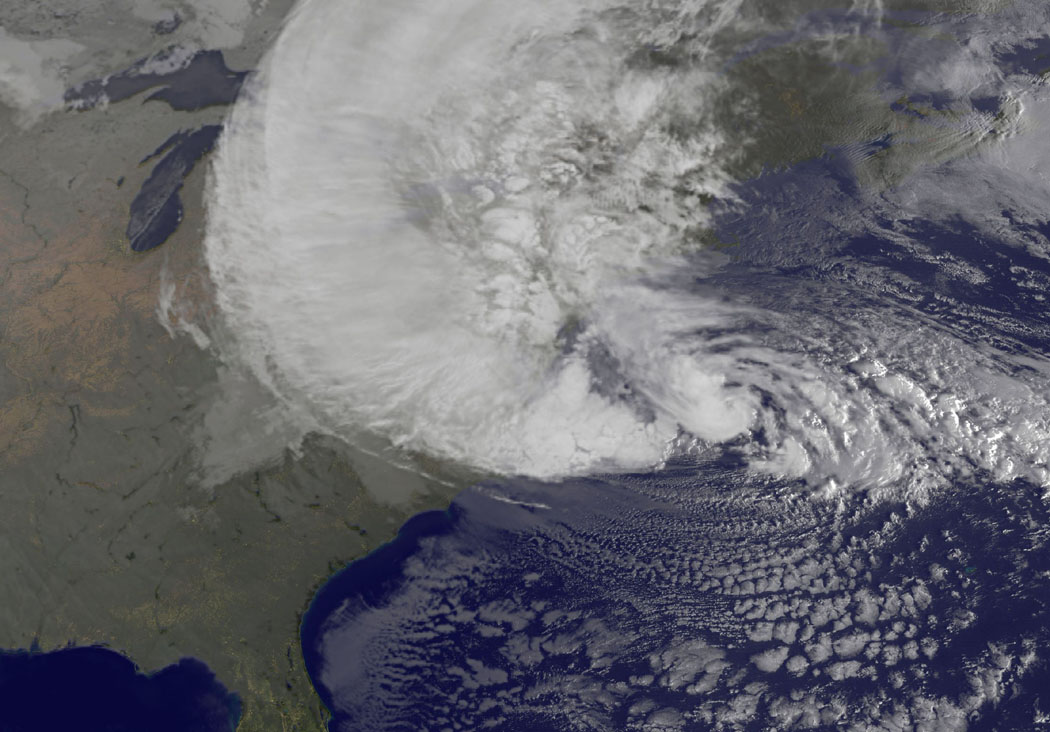
Climate scientists have not yet reached consensus about whether global warming will tend to increase or decrease the total number of hurricane-strength storms. But there is strong agreement that warming creates the conditions for larger and more powerful hurricanes: warmer sea surface temperatures, higher sea levels and more moisture in the atmosphere. These general tendencies interact with other local and regional factors to produce the local weather.

Climatologist Kevin Trenberth parses the specific conjuncture that intensified Hurricane Sandy: ‘The sea surface temperatures along the Atlantic coast have been running at over 3C above normal for a region extending 800km off shore all the way from Florida to Canada. Global warming contributes 0.6C to this. With every degree Celsius [of warming], the water holding of the atmosphere goes up 7%, and the moisture provides fuel for the tropical storm, increases its intensity, and magnifies the rainfall by double that amount compared with normal conditions.’


In the week or so before Hurricane Sandy pummeled the northeast US, the warming denial industry was hard at work. The right-wing, Koch-funded Cato Institute (publishers of In Defense of Global Capitalism, among other dismal screeds) attempted to sabotage a US government assessment of climate change impacts by issuing what poses as an ‘addendum’ to the original. The 2009 report, Global Climate Change Impacts in the United States, was prepared by the US Global Change Research Center and presented to Congress as a summary of the ‘best science’ on the subject. The authoring federal entity is itself a conglomeration of thirteen departments and agencies, including the National Science Foundation, NASA and the Smithsonian Institution,  but also others, like the Environmental Protection Agency, that are routinely contained by hostile political appointments, as well as a battery of agencies straightforwardly in the business of promoting or defending the status quo of accumulation (Departments of Commerce, Interior, Energy, Defense and State, and the Agency for International Development). One can only imagine the pressures and internal struggles that shaped the publication of this report.

Monday, October 29, 2012

administering biodiversity


‘Extinction rates are rising by a factor of up to 1,000 above natural rates. Every hour, three species disappear. Every day, up to 150 species are lost. Every year, between 18,000 and 55,000 species become extinct. The cause: human activities.’
- Ahmed Djoghlaf, head of the UN Convention on Biological Diversity.

The problem, again: The interconnected ecosystems that make up the biosphere are all dependent on the capture, conversion and distribution of the sun’s energy through the planetary cycling of carbon. The biosphere has proved to be fairly resilient. Within the constraining parameters of life on earth, however, changes in climate can have enormous consequences. Interventions, human or non-human, that impact ecosystems and the carbon cycle can result in irreversible losses of biodiversity and trigger abrupt and uncontrollable climate changes. The contemporary form of human society – the global social process we know as capitalist modernity – has initiated both a new mass extinction event and global warming. As a result, tens of thousands of life forms will be ‘disappeared’ and millions of people will lose, directly or indirectly, their lives, health or homes through famine, drought, illness and war. These processes are already unfolding. The urgent question is: how far will they go?

Put differently, the problem is the dominant social process and the difficulty in changing it. The social process, organized to maximize capital accumulation and channeled through a rivalrous interstate system, compels all individuals to compete for places in a national economy and compels all states to promote and defend one national economy against all others. Growth, measured in Gross Domestic Product, is a given. By this logic, capital and biosphere are caught in a relation of antagonism, setting up endless and dreary struggles between the claims of jobs and environment, profits and endangered species, consumption and biodiversity. Through this optic, climate change and mass extinction are simply matters of national security and risk assessment. It is taken for granted that science and technology will enable human adaptation to ecological degradation and the weather. The national security-surveillance state is oriented toward enforcing the current social logic, not changing it. The state’s concern is: who can dominate in the new climate scenario? Or in other words: what must be changed, in order to keep in place the current regime of accumulation and logic of domination? Seen from below, however, the problem is how to change that very logic.

Monday, May 16, 2011

forward leaning


So much has happened since the last post here - too much, too quickly for a running critical round-up, or the stamina of a scurvy tune.

Of the bad news, from Fukushima to the ongoing dirty wars to xenophobic progroms (in Athens, right now, sickeningly), what more to say than has already been said here, repeatedly, about the splicing of terror and war machine? Disaster drones on and will do, the logic holding.

But these months have also seen a momentous reaching for liberation, a stirring emergence of self-empowered subjectivities rolling across North Africa and into the Middle East - a heartening, amazing and humbling movement from below, still unfolding, still gathering and spreading. How far, how deep? The subjects that have emerged, massively and historically, will decide that for themselves.

And they will have to, for the old enforcers will not easily get out of their way. Scrambling, dissembling, bombing here, turning the blind eye there, the old order will do all it can to contain, capture and exhaust these energies, and to restore privileged access to gas and oil and addicted markets for arms.

Friday, December 24, 2010

normalizing catastrophe


Normalizing Catastrophe: Cancun as Laboratory of the Future  
         
by Eddie Yuen


Sixty-five million years ago, an asteroid crashed into what is now the Yucatan Peninsula of Mexico and rendered extinct 70% of all life on Earth. In December of 2010 in Cancun, a mere geological stone's throw from the Chicxulub crater that ended the reign of the dinosaurs, a conclave of political and corporate leaders presided over a conference that failed to slow down the next great extinction event on this planet.

But for this geographic coincidence it's unlikely that this conference will be remembered as anything more than another tedious and predictable step towards a future of managed climate chaos and accelerated global enclosures. Cancun is most significant, though, not as the scene of a crime but as a laboratory of climate apartheid. Whatever fearsome predation the Yucatan of the late Cretaceous may have harbored, the Cancun of the early Anthropocene is the model of a naturalized social order even redder in tooth and claw. Even to use the language of "climate talks" is like speaking of the Israeli/Palestinian peace process. As linguist Noam Chomsky said years ago, the mere utterance of this phrase validates the discourse that there is such a process.

This particular conference, rightfully overshadowed by the Wikileaks saga, was both anti-climactic and anti-climatic, in the words of Laura Carlson, director of the American Policy Program in Mexico City. The Indigenous Environmental Network summed it up nicely: "The Cancun Agreements are not the result of an informed and open consensus process, but the consequence of an ongoing US diplomatic offensive of backroom deals, arm-twisting and bribery that targeted nations in opposition to the Copenhagen Accord during the months leading up to the COP-16 talks".

Wednesday, December 22, 2010

the long night


The Long Night
 
by Iain Boal
 
Winter Solstice 2010

4.30 AM, BERKELEY---Later today, in the hours between total lunar eclipse and the longest night, the US Federal Communications Commission (FCC) will be discussing an Order (drafted by its chairman and Obama appointee) which spells the end of the internet as a common carrier, and will allow "paid prioritization" by big capitalist firms. We have lived through the opening military-socialist phase of the planetary telecommmunications system, whose infrastructure required public subvention and state action far beyond the ability of private capitals - cold war computing and informatics, Pentagon ballistics and telemetry, DoD funded materials science, rocketry and satellite R & D, eminent domain and state seizures as necessary, etc. Now Big Telecom is poised and the electromagnetic enclosures are beginning in earnest; the camel's nose is the (de)regulation of the internet in its etherial mode, the so-called "mobile services". 


The opinion of the mass of commoners counts for nought, and the silent compliance of public servants and officials is at this stage a given, as when in 1800 the seizure of the commons could be completed, no longer in "letters of blood and fire", but with the stroke of the pen in Parliament by means of private members' Bills of Enclosure. In 2010 it takes a comedian-turned-US senator, aghast at the idea of Comcast customers being blocked from Netflix, to describe the prospects: 

"Internet service giants like Comcast and Verizon want to offer premium and privileged access to the Internet for corporations who can afford to pay for it...For many Americans - particularly those who live in rural areas - the future of the Internet lies in mobile services. But the draft Order would effectively permit Internet providers to block lawful content, applications, and devices on mobile Internet connections. Mobile networks like AT&T and Verizon Wireless would be able to shut off your access to content or applications for any reason. For instance, Verizon could prevent you from accessing Google Maps on your phone, forcing you to use their own mapping program, Verizon Navigator, even if it costs money to use and isn't nearly as good. Or a mobile provider with a political agenda could prevent you from downloading an app that connects you with the Obama campaign (or, for that matter, a Tea Party group in your area).

Wednesday, October 20, 2010

Friday, October 15, 2010

against austerity


The resistance to immiseration in Europe is heating up and beginning to spread. In France, open-ended strikes are continuing, with students now joining in. Friends and comrades from Contrainfo (Athens) share this report on an occupation of the Acropolis by precarious cultural workers.
GR


‘Beneath the Acropolis we go on strike…’

by Contrainfo
15 October 2010

Approximately 100 ministry contractual employees barricaded themselves inside the Acropolis site overnight on Wednesday, 13 October, demanding two years of back pay and permanent contracts. They padlocked the entrance gates and refused to allow in tourists. Guardians of the Acropolis site (Athens, Greece) work in behalf of the Hellenic Ministry of Culture and Tourism either as civil servants (with permanent contracts) or as contractual employees (with temporal contracts). More than 400 contract-workers of the Ministry of Culture and Tourism have been working unpaid for up to 22 months. These are workers who have up to 20 years of service. The Greek government shows them the door of unemployment. Most of them will be laid off after years of flexible and underpaid work.

Wednesday, October 6, 2010

brumaria on the general strike


Spain: The General Strike of September 29th

by Brumaria

On September 29th, a General Strike (Huelga general) against the Ley de Reforma Laboral — driven by Zapatero’s government and passed by the parliament — was organized by the practical entirety of labor unions and leftist organizations and parties, with unequal results.

It is necessary to search for the antecedents to said events in the profound economic crisis that Spain has suffered from during the last three years; this crisis (latent and prior to the global crisis of September 2008 involving the financial markets) is inscribed in the following parameters and events:

- Enormous growth of public works and construction of homes during the last 15 years (currently in Spain there are 3 million empty homes)
- Unstoppable increase in the number of unemployed (4 million to date)
- Economic recession, drop in consumption, and zero growth the last two years
- Exponential increase of public debt based on the search for financial resources with which to pay social loans to the unemployed


Tuesday, October 5, 2010

spectacle and austerity


Across France on Saturday (2 October), huge demos protested misery measures. But how huge, and who decides if such protests matter?

No secret: the business of capitalist news media is to market assertion, not to expose the truth about what happens. Circulating along with all the other transmitted garbage, truth rushes past, like slips of the tongue - but above all as truth about the concentration of social power congealed in every media report.

In the current coverage of resistance to austerity in Europe, what is striking is how relentlessly state and corporate news reports reduce massive, embodied contestation to mere contention - to assertion and counter-assertion about how many protesters were actually in the street.


The process is a form of castration: precisely the logic of spectacular representation Guy Debord raged against more than forty years ago. Maybe it won't be useless to recall how it works, and see how it is still operating today.

Saturday, October 2, 2010

the fightback


Three days ago (29 September), the first general strike in Spain in eight years coincided with a general call-out from the European Trade Union Confederation to protest Eurozone austerity programs. The strike, although limited in time, was evidently strong and effective, and union actions and protest demos took place in many European capitals  - including Brussels, where 100,000 workers took to the streets.